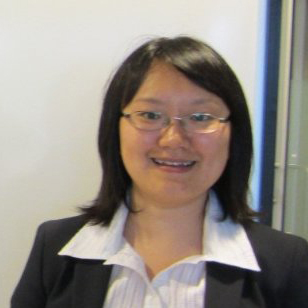
"Overall, the PHDA 03 course experience was great. The greatest benefit to me was learning about GIS and practicing the learning through lab assignments with ArcGIS."> read full testimonial
I learned about the Professional Specialization Certificate in Population Health and Data Analysis (PHDA) program after conducting an internet search to find an online program covering courses that provided hands on experience using GIS and statistical software packages. Initially, I was doubtful that I would find such a program until I found the University of Victoria’s PHDA program. Allowing students to gain hands on experience remotely with software packages such as ArcMap, SAS, and Mplus while having the flexibility to work full time is invaluable. Also having the opportunity to use Population Data BC’s administrative data with these packages offered a type of learning experience that I could not have had anywhere else.
My current job motivated me to enroll in the PHDA program. I currently work for the Maritime SPOR Support Unit (MSSU) and the New Brunswick Institute for Research Data and Training (NB-IRDT), as a Database Analyst. In my position, I analyze New Brunswick’s population health data and federal government datasets. By improving my data analysis skills through the PHDA program I am now able to apply these skills in my current position.
I completed all the courses in the PHDA program and enjoyed all of them. I liked the opportunity to interact with my classmates daily and work together to answer questions on course material and statistical analysis. The courses that provided me the greatest benefit were the Population Health and Geographic Information Systems (GIS), and Spatial Epidemiology and Outbreak Detection and Working with Administrative Data courses. As I was completing the Working with Administrative course, the NB-IRDT was just receiving its first health data sets, so having had the opportunity to use BC’s administrative datasets such as the Discharge Abstract Database (DAD) provided me with a first glance at what our provincial data would look like, and how I could manipulate and analyze them.
I have been able to apply the skills I have learned from the PHDA program to my work/research. Using the GIS and SAS skills that I learned from the PHDA program I was able to create a Normalized Difference Vegetation Index (NDVI) layer using GIS software, that showed peak greenness for the entire country over a ten-year period. Using this data and other administrative databases a team of researchers led by Dr. Dan Crouse and myself, conducted a research study that looked at how living by residential greenspace can impact longevity. Just recently this article was accepted and published in The Lancet Planetary Health (October,2017). In my current position, I have also been able to use the SAS skills that I learned from the PHDA program to create and present an Introductory SAS course to government, students and faculty.
The strengths of the PHDA program were the hands-on learning provided through the use of software that is difficult to access, such as SAS, ArcMap, and Mplus. Another strength of the program was the ability to interact and learn from classmates through the course site and the remote desktop. Also, all the instructors came from diverse backgrounds and were knowledgeable, easy to interact with and offered a wide range of skills and experience, which they were able to share with the class.
I would recommend this program to others especially individuals working in academia, government organizations and to Masters and Ph.D. students. I would suggest that students have a basic understanding of statistical methods, and possibly some experience with statistical software packages. I would also inform someone who is interested in the program that taking the program advanced my knowledge of GIS and SAS, and allowed me to improve the skills needed for my current position. I would also mention to anyone interested in the program that they should ensure that they have dedicated time to put into the PHDA courses every week, so they can get the most out of the course experience.
I really enjoyed this program. It improved my analysis skill for my current job and career. I would recommend this program to anyone who asks about it, and often recommend the PHDA courses to colleagues and other stakeholders that I interact with daily. After informing the organization that I work for about the PHDA courses, we were encouraged to enroll and take the PHDA courses. I am sure that there will be employees at my workplace that will become PHDA students soon.
"The courses that provided me the greatest benefit included the Population Health and Geographic Information Systems (GIS), and Spatial Epidemiology and Outbreak Detection.
Using the GIS and SAS skills that I learned from the PHDA program, I was able to create a Normalized Difference Vegetation Index (NDVI) layer using GIS software, which showed peak greenness for the entire country over a ten-year period. Using this data and other administrative databases a team of researchers led by Dr. Dan Crouse and myself, conducted a research study that looked at how living by residential greenspace can impact longevity."
"I found a strength of the program to be the engagement of the other students, who are usually all from diverse backgrounds with varying levels of experience with the content. It was helpful to learn from each other. The workload was also quite manageable for those who are working full-time in addition to the courses. The teachers also all seemed knowledgeable and passionate about the topics, and were willing to help students answer their questions or provide assistance for the course projects."
I saw a poster for the programme advertised on my campus, and found the course selection to be highly relevant to my doctoral studies.
The variety of courses provided learning opportunities for various software programmes, e.g., SAS and ArcGIS, while also teaching fundamentals of epidemiological statistics and other relevant bases for public health research. The use of geographical information systems in two courses was also of immense benefit.
The skills learned in this programme are highly and directly relevant to my doctoral research, and are being used on a near-daily basis. For example, I use both SAS and GIS to analyse various administrative datasets, and have found that the statistical background gleaned from this programmes has enabled me to read more critically and use more sophisticated analyses in my own work.
The diversity of courses is an immediate strength, as is the online format. Every instructor was highly engaged and enthusiastic, and was happy to have discussions about course material and further topics via e-mail.
I would (and already have) recommended the PHDA programme to colleagues and young researchers. However, I would emphasise setting aside time to do the readings and work carefully through code. Also take the opportunity to learn as much from the instructors as possible. The papers and lessons are useful references for the future as well. I wish I had kept them on paper!
No, but I want to thank the administrative staff for managing such an excellent programme. Also, I am very happy that they offer a graduate student rate! Many thanks!
Copyright 2025 | All rights reserved